
Digital Marketing for Architecture Firms: The Complete UK Guide
The UK architecture sector is worth over £5 billion, yet 72% of UK consumers remain unaware of architects' core roles. This awareness gap represents both a challenge and an opportunity: the firms that master digital marketing will capture market share from their less-visible competitors. specialist SEO services for architects
Digital marketing is no longer optional for architecture practices. With typical sales cycles lasting 60–90 days, multiple decision-makers involved, and high project values (£50–£150 cost per lead for quality prospects), a strategic digital presence has become essential to consistent business growth.
This complete guide covers everything you need to know about digital marketing for architecture firms in the UK—from SEO and content strategy to social media, email nurturing, and measuring ROI. By the end, you'll have a clear 90-day action plan to grow your practice online.
5:1
ROI from Digital Marketing
For UK architecture firms
30%+
Email Open Rate
Architecture sector average
38,981
ARB Registered Architects
UK market size
15%
Revenue Growth 2024
UK architecture sector
Key Insight
Architecture firms that invest in digital marketing—especially SEO, content thought leadership, and LinkedIn B2B strategy—see average fee income per partner rise by 15% within 12 months. The sector is competitive, but those with visibility win.
Why Digital Marketing Matters for Architecture Firms
Architecture is a trust-based, relationship-driven business. Yet most potential clients first encounter your firm via search engines, social media, or referral websites—not through personal networks alone. This is where digital marketing becomes critical.
The Awareness Gap
Recent research shows 72% of UK consumers are unaware of architects' core roles. They confuse architects with interior designers or contractors, or don't realise they need specialist architectural input until deep into a project. Digital marketing—especially educational content—helps close this gap.
When potential clients search "residential architect near me," "architecture for small spaces," or "cost to hire an architect," your visibility matters. Without strong organic search presence, you lose these high-intent leads to competitors with better digital presence.
The Competitive Landscape
There are 38,981 registered architects in the UK, and many are adopting digital marketing. Those with:
- Well-optimised websites ranked for local search
- Strong portfolios on Instagram, Houzz, and Pinterest
- Regular thought-leadership content on LinkedIn
- Positive online reviews and testimonials
…are winning more leads and commanding premium fees.
Your Digital Marketing Budget
Most architecture firms allocate 4–6% of annual revenue to marketing. With average fee income per partner at £2.4 million, a solo practice might invest £96k–£144k annually; larger firms considerably more. The key is ROI: UK firms reporting 5:1 returns are typically using multiple integrated channels, not single-channel approaches.
SEO for Architecture Firms
Search engine optimisation (SEO) is the foundation of long-term digital visibility. Unlike paid ads, which stop working the moment you pause spend, organic search traffic compounds—a properly optimised site generates leads year after year with minimal ongoing cost.
Local SEO Dominance
Most architecture projects start with local intent: "architect in Manchester," "sustainable design practice London," "commercial architects Yorkshire." Local SEO—Google Business Profile optimisation, local citations, location-specific keywords—is essential.
For a comprehensive deep-dive into SEO strategy for architecture firms, see our complete SEO for architects guide (pillar article). This article covers keyword research, technical SEO, link building, and monthly optimisation workflows specific to architecture practices.
Content Marketing & Thought Leadership
Architecture is a high-value, long-consideration business. Prospects often evaluate multiple firms over weeks or months. Content marketing keeps your practice top-of-mind and demonstrates expertise.
Why Content Matters for Architects
Prospects searching "cost to build an extension," "how to design a kitchen for small spaces," or "sustainable architecture principles" are early in their decision journey. If your content answers these questions, you're the firm they'll call.
Content also supports thought leadership. Architects publishing research, case studies, and insights on LinkedIn, Medium, or industry publications are perceived as category leaders—and can command premium fees.
Content Pillars for Architecture Firms
- Project case studies: Before/after stories with budget, timeline, and client outcomes. High-performing on Instagram, Pinterest, and Houzz.
- Educational how-to content: "Guide to Planning Permission," "Cost Breakdown for Residential Renovation," "Sustainability in Modern Architecture." These rank well organically and drive trust.
- Trend and opinion pieces: Thought leadership on architecture news, design trends, regulatory changes. Ideal for LinkedIn articles and industry publications.
- Industry regulation guides: RIBA rules on marketing (truthful, transparent, no misleading claims), ARB guidance, Building Regulations updates. These rank well and position you as compliant and informed.
RIBA permits full marketing of your services provided claims are truthful and transparent. This means you can publish case studies, testimonials, and before/after images without restriction, as long as you don't make false claims about capabilities or qualifications.

Content Distribution Channels
Creating great content is only half the battle. Distribution determines reach:
- Owned channels: Your blog and email list. These drive organic traffic and nurture prospects over time.
- Social media: Instagram and Pinterest for portfolio and inspiration; LinkedIn for thought leadership and B2B visibility.
- Industry publications: Bylined articles in Architect's Journal, Building Design, or RIBA publications boost authority and backlinks.
- Email newsletters: Regular updates to your subscriber list keep your practice visible to past clients and warm leads.
Social Media Strategy for Architects
Architecture is inherently visual. Social media platforms are powerful channels to showcase your portfolio, share design inspiration, and build community. However, each platform requires a different strategy.
LinkedIn (B2B & Thought Leadership)
LinkedIn is where decision-makers—developers, project managers, facility planners, corporate clients—spend their professional time. Use LinkedIn to:
- Share thought-leadership articles on design trends, regulation changes, and industry insights.
- Post behind-the-scenes project progress and team spotlights.
- Engage with industry discussions and local business community posts.
- Drive traffic to your blog and case studies.
LinkedIn engagement significantly outperforms organic social metrics for architecture firms, especially for complex B2B projects.
Instagram (Portfolio & Inspiration)
Instagram is essential for architecture firms. It's where potential residential and commercial clients browse design inspiration. Use Instagram to:
- Share stunning project photography from completed work.
- Post quick design tips, process sketches, and behind-the-scenes renders.
- Use Reels to show before-and-after transformations or design walkthroughs.
- Build community through engagement with design accounts and local businesses.
Post consistently (3–5 times per week) and use location tags and relevant architecture hashtags to reach local audiences.
Pinterest (Passive Discovery & Inspiration)
Pinterest is unique: users are actively searching for design inspiration and planning projects. Architecture firms that pin project images, design guides, and inspiration boards see significant referral traffic. Pinterest pins can drive traffic months or years after posting, making it a long-term asset.
Houzz (Reviews & Lead Generation)
Houzz is the go-to platform for homeowners researching architects and designers. A strong Houzz profile with high ratings, project photos, and client reviews directly generates qualified leads. Encourage past clients to leave reviews on Houzz; this credibility directly impacts conversion.
Need help with your social media strategy?
Our guide to architect social media marketing covers platform-by-platform tactics, content calendars, and engagement benchmarks specific to architecture practices.
Read the Full GuideEmail Marketing & Lead Nurturing
Email marketing is one of the highest-ROI channels for architecture firms. Prospects in your pipeline often take 60–90 days to decide. Email keeps your practice visible throughout this window.
Building Your Email List
Start by capturing emails from:
- Website visitors via lead magnets (e.g., "Cost Guide to Residential Extensions," "Design Trends Report")
- Past clients (collect emails during and after projects)
- Social media followers
- Event attendees (networking events, webinars)
Email Content & Nurturing Sequences
Once you have emails, segment your list and send relevant content:
- Welcome series: Introduce your firm, share your unique approach, offer a consultation.
- Educational drip campaigns: Regular tips, guides, and case studies aligned with prospect interests.
- Project completion newsletters: Share recently completed projects with impressive results and client testimonials.
- Seasonal campaigns: Promote renovation planning in Q1, garden design in spring, extensions before summer, etc.
Email Performance Benchmarks
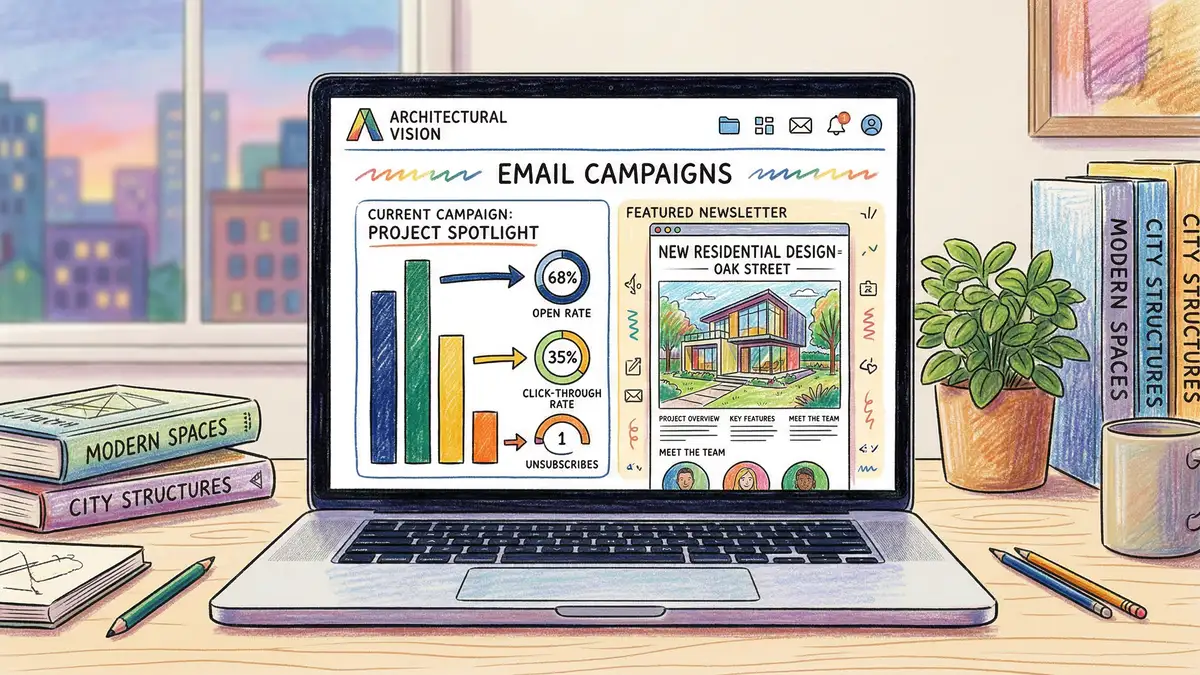
Architecture firm email campaigns typically achieve:
- 30%+ open rates (industry average for the sector)
- 3–5% click-through rates
- 2–4% conversion rates to leads/consultations
These rates are strong indicators of engaged audiences. Compare your metrics regularly and test subject lines, send times, and content types to improve performance.
PPC & Paid Advertising
Whilst organic channels (SEO, content, referrals) should be your foundation, paid advertising accelerates visibility and lead generation, especially in competitive markets.

Google Ads for Architecture Firms
Google Search ads target high-intent keywords: "architect near me," "design services London," "home extension architect." Budget allocation (£20–£50 per day to start) tests ROI; you can scale on winning keywords.
Our complete Google Ads guide for architects covers keyword targeting, bid strategy, landing page optimisation, and conversion tracking—essential reading if you plan to invest in PPC.
LinkedIn Ads
LinkedIn ads are powerful for B2B architecture projects (commercial, corporate renovations, developer partnerships). Target by job title, company size, and industry to reach decision-makers directly.
Instagram & Facebook Ads
Visual ads showcasing your best projects can drive awareness and website traffic from homeowners planning renovations. Retargeting past website visitors with ads keeps your practice top-of-mind.
Cost-Per-Lead Reality
For high-value architecture projects, expect cost-per-lead of £50–£150 depending on market, competition, and targeting. At these rates, a single project win (average project value £30k+) quickly justifies the ad spend.
Website Optimisation
Your website is the hub of your digital presence. It's where prospects make final decisions, and where you convert traffic into leads. Optimisation is continuous.
Core Elements of an Effective Architecture Website
- Clear value proposition above the fold: Within seconds, visitors should understand what you do, who you serve, and why they should contact you.
- High-quality portfolio: Large, professional images of completed projects. Include project context: budget, timeline, client type, design approach.
- Service pages for each offering: Dedicated pages for residential design, commercial projects, interior architecture, etc., each optimised for local keywords.
- Testimonials and case studies: Social proof is essential. Feature client success stories with measurable outcomes (cost savings, faster timelines, regulatory approvals).
- Clear CTA (call-to-action): "Request a Consultation," "Get a Quote," "Schedule a Discovery Call." Make it easy for prospects to take the next step.
- Mobile responsiveness: 50%+ of users visit on mobile. Your site must look and function flawlessly on all devices.
- Fast loading speed: Sites loading in under 2 seconds have significantly better conversion rates. Optimise images, minify code, use a CDN.
Technical SEO & Site Architecture
Beyond design, technical optimisation is crucial:
- Implement schema markup (LocalBusiness, FAQPage, ImageObject for portfolio items)
- Optimise title tags and meta descriptions for each page (under 60 chars and 160 chars respectively)
- Create a logical site structure and internal linking strategy
- Ensure HTTPS security and mobile-first indexing
See our architect website design & SEO guide for a comprehensive technical checklist and design principles specific to architecture portfolios.
Measuring ROI & Setting Budgets
Marketing budgets mean nothing without measurement. Track your digital marketing ROI by channel, adjust spend based on performance, and reinvest in winners.
Budget Allocation by Channel
A typical architecture firm might allocate 4–6% of annual revenue budget across channels like this:
| Channel | Budget % | Performance Metric & Benchmark |
|---|---|---|
| SEO & Content | 30–35% | Cost per lead: £20–£50; ROI: 5:1 to 10:1 (long-term) |
| Paid Search (Google Ads) | 20–25% | Cost per lead: £50–£150; ROI: 3:1 to 5:1 (immediate) |
| Social Media & Paid Social | 15–20% | Cost per lead: £30–£100; ROI: 2:1 to 4:1; brand awareness driver |
| Email Marketing | 10–15% | Cost per lead: £5–£20; ROI: 8:1 to 15:1 (nurture existing leads) |
| Website & Tech | 10–15% | Conversion rate improvement; funnel optimisation ROI |
| PR & Partnerships | 5–10% | Brand authority; backlinks; referral traffic |
Key Performance Indicators (KPIs) to Track
| KPI | How to Calculate & Why It Matters |
|---|---|
| Cost Per Lead (CPL) | Total marketing spend ÷ leads generated. Benchmark: £50–£150 for architecture. Track by channel to identify winners. |
| Lead Conversion Rate | Leads that close as projects ÷ total leads. Most architecture firms convert 10–20% of qualified leads. |
| Customer Acquisition Cost (CAC) | Total marketing spend ÷ new customers. Should be 3–5x lower than average project value. |
| Return on Ad Spend (ROAS) | Revenue from ads ÷ ad spend. Healthy ROAS for architecture: 3:1 to 5:1. |
| Organic Traffic Growth | Track monthly organic sessions from Google Analytics. Expect 10–20% MoM growth with consistent content and SEO. |
| Lead-to-Proposal Rate | Leads that receive a proposal ÷ total leads. Indicates sales process quality. |
Setting Your First-Year Budget
If you're just starting digital marketing:
- Small practice (£250k–£500k annual revenue): Allocate £10k–£30k to digital marketing. Start with SEO, website optimisation, and LinkedIn.
- Mid-size practice (£500k–£2M): Allocate £30k–£120k. Add paid search, social media ads, and email marketing.
- Large practice (£2M+): Allocate £120k–£500k+. Invest across all channels, consider in-house marketing team or agency partnership.
The key is to test, measure, and optimise. Your first-year budget is experimental; year two should reflect what works for your firm.
90-Day Digital Marketing Action Plan
Here's a step-by-step plan to launch or scale your digital marketing over the next 90 days:
Weeks 1–2: Audit & Strategy
Audit your current digital presence: website performance (speed, mobile, conversions), Google Business Profile, social media profiles, existing content. Set 90-day goals (leads generated, traffic targets, conversion rate). Create a content calendar for blog, LinkedIn, Instagram, and email.
Weeks 3–4: Website Optimisation & Launch
Optimise website for mobile responsiveness, loading speed, and conversions. Add clear CTAs, testimonials, case studies. Implement analytics (Google Analytics 4, conversion tracking). Launch Google Business Profile optimisation (complete info, photos, regular posts).
Weeks 5–8: Content & SEO Launch
Publish 4–6 high-value blog posts targeting primary keywords (architecture SEO, local design services, etc.). Optimise existing content for keywords. Build internal linking strategy. Start LinkedIn thought leadership (1 post per week). Send first email nurture sequence to existing contacts.
Weeks 9–10: Paid Channels Launch
Launch Google Ads campaign targeting local keywords and service pages. Set daily budget of £20–£30 to start. Create LinkedIn Ads for B2B projects. Test Instagram/Facebook ads with portfolio imagery. Monitor daily performance and adjust bids/targeting.
Weeks 11–12: Measurement & Optimisation
Analyse 90-day results: leads generated, cost-per-lead, traffic growth, conversion rate. Identify top-performing content, channels, and keywords. Double down on winners, pause underperformers. Plan Q2 strategy based on data. Set new targets for next quarter.
Common Mistakes to Avoid
Watch Out: Digital Marketing Pitfalls for Architects
- Inconsistent messaging: Using different value propositions across channels confuses prospects. Define your unique positioning and use it everywhere.
- Neglecting mobile users: 50%+ of traffic is mobile. A non-mobile-friendly site loses half your leads.
- Avoiding testimonials due to privacy concerns: RIBA permits client testimonials and before/after images if clients consent. Collect written permission and feature case studies prominently.
- Unclear CTAs: Vague calls-to-action ("Contact us") underperform. Use specific CTAs: "Schedule a 30-min consultation," "Request your free scope estimate," "Book a site visit."
- Chasing vanity metrics: Social media followers don't equal leads. Focus on engagement, website traffic, and conversions—not follower count.
- Ignoring long sales cycles: Architecture decisions take 60–90 days. A single ad or blog post won't close deals. Use email nurturing and retargeting to stay visible throughout the decision window.
- No tracking/measurement: Without conversion tracking and analytics, you're flying blind. Set up Google Analytics, UTM parameters, and CRM tracking from day one.
- Overpromising on timelines: SEO and thought leadership take 3–6 months to show results. Paid ads deliver faster, but organic builds long-term asset value. Be patient.
Frequently Asked Questions
Ready to Grow Your Architecture Practice Online?
Our team specialises in digital marketing for architects. Let us build a strategy that delivers qualified leads.
Architect Marketing Hub
Clwyd Probert
Managing Director, Whitehat SEO
Clwyd has over 15 years of experience in digital marketing and SEO, helping professional services firms achieve sustainable organic growth through evidence-based strategies.
Sources: RIBA Guidance on Marketing for Architects 2024, Architects Registration Board (ARB) 2024, BrightLocal Local SEO Benchmarks 2024, UK Architecture Sector Report 2024, Houzz UK Market Research 2025