
Why Does Local SEO Matter for Small Businesses in 2026?
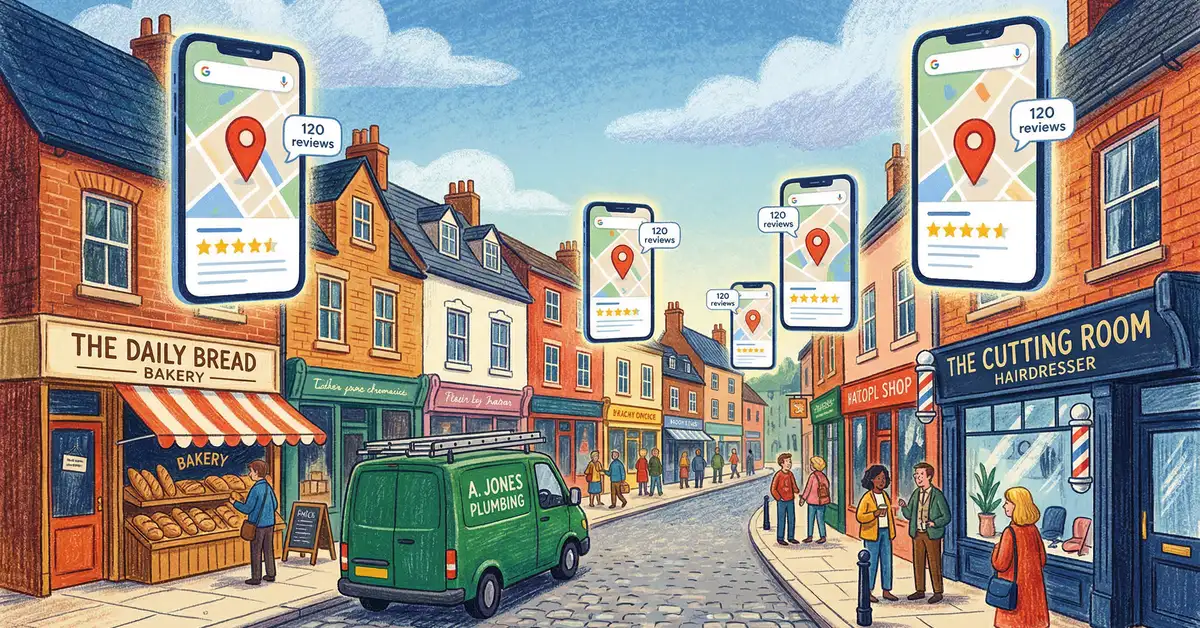
Local SEO is the practice of optimising your online presence so your business appears when nearby customers search for your products or services. For UK small businesses, local search has become the primary way customers find you: 46% of all Google searches carry local intent, and 76% of people who search for a local business on their mobile phone visit that business within 24 hours. More importantly, 28% of those local searches convert into a purchase the same day, according to Loop Digital's 2026 research — making local searchers among the highest-intent audiences any small business can reach.
The local search landscape has shifted significantly in the past year. Mobile devices now account for 71% of all Google search traffic in the UK, up from 65.8% in 2025, and voice searches represent 27% of mobile queries — with voice searches being three times more likely to carry local intent than typed queries. AI search platforms including Google AI Overviews, ChatGPT, and Perplexity are now recommending local businesses directly within conversational answers. Yet only 1–11% of eligible local businesses appear in AI-generated recommendations, creating a substantial visibility gap that early adopters can exploit.
Key Takeaway
Local SEO delivers exceptional ROI for small businesses — 40% of local SEO campaigns achieve 500% return on investment or greater, and local search converts at 14.6% compared to just 1.7% for cold outreach. If you invest in only one marketing channel as a small business, local SEO should be it.
46%
Local Intent
Of all Google searches have local intent
76%
Visit Within 24hrs
Of mobile local searchers visit a business same day
500%+
ROI Potential
Achieved by 40% of local SEO campaigns
Sources: Loop Digital Local SEO ROI Report 2026, Social Matrix Local Search Study 2025, SQ Magazine Google Search Statistics 2026
How Do You Optimise Your Google Business Profile for Maximum Visibility?
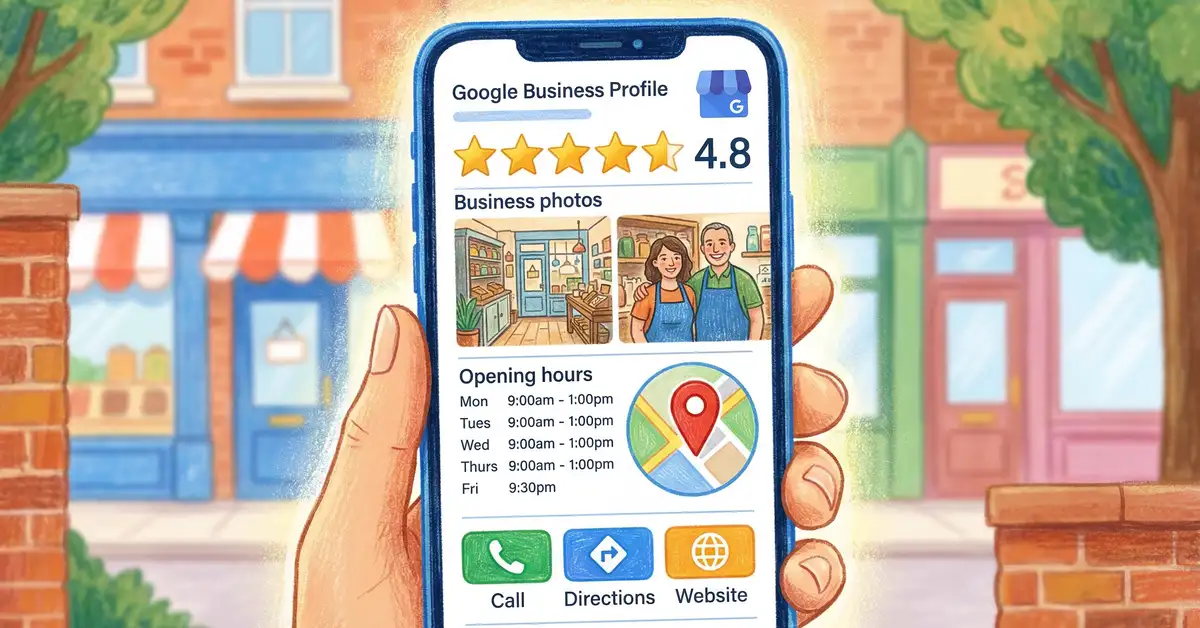
Your Google Business Profile (GBP) is the single most important asset in local SEO. Businesses with complete profiles are 50% more likely to be considered by potential customers, and those appearing in the Local 3-Pack — the three businesses shown with a map at the top of local search results — receive 126% more traffic and 93% more customer actions than businesses ranked in positions 4–10. Getting your GBP right is not optional; it is the foundation everything else builds upon.
Choose your primary category carefully. The Whitespark 2026 Local Search Ranking Factors study — based on analysis by 47 leading local SEO experts — identifies your primary GBP category as the single most important ranking factor for the Local Pack. The difference between selecting "Dentist" versus "Paediatric Dentist" or "Restaurant" versus "Coffee Shop" determines which searches you appear in and which competitors you face. Research shows businesses using four additional categories alongside their primary achieved the highest average map ranking of 5.9, but only add categories that genuinely describe your services — Google penalises irrelevant categories.
Write a keyword-rich business description. You have 750 characters to describe who you are, what you do, and where you operate. Instead of vague generalities like "Professional services company", write something specific: "Leading plumbing and heating company in Manchester providing boiler installation, emergency repairs, and bathroom fitting across Greater Manchester and surrounding areas." Include your service types, locations served, and what makes you different.
Add specific services and products. Rather than listing "Plumbing", break your offerings into specific items: "Boiler Installation", "Emergency Leak Repair", "Bathroom Fitting", "Radiator Replacement". Each service listing creates an additional surface for Google to match you to relevant searches.
Upload authentic photos regularly. Businesses showcasing photos receive 40% more requests for directions. Google's AI now interprets photo content to understand your expertise — a plumber who uploads a photo of a tankless water heater installation gains ranking advantage for "water heater repair" searches even without that keyword in text. Use genuine photos of your premises, team, and completed work rather than stock photography.
Warning: Opening Hours Affect Rankings More Than You Think
Businesses that show as "closing soon" experience visibility drops even an hour before closing time, because Google avoids showing businesses about to close to searchers seeking immediate service. Ensure your GBP hours match your actual operations precisely, including setting special hours for bank holidays and planned closures. Inaccurate hours actively harm your rankings.
What Are the Most Important Local Ranking Factors in 2026?
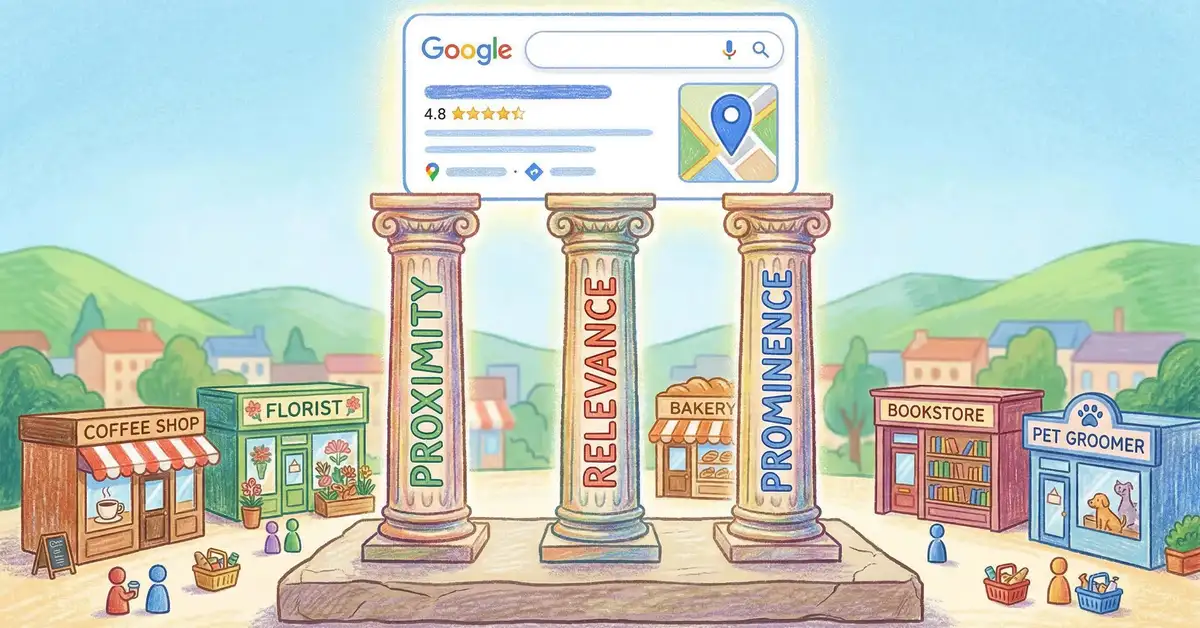
Google's Local Pack rankings are determined by three core pillars: proximity (how close your business is to the searcher), relevance (how well your business matches the search query), and prominence (how well-known and trusted you are). Understanding how these interact in 2026 reveals that proximity alone does not determine rankings — among businesses at similar distances, relevance and prominence decide the order. The Local Pack captures 42% of all clicks on local search results, making it the most valuable real estate in local search.
| Ranking Factor | Category | Why It Matters |
|---|---|---|
| Primary GBP category | Relevance | Single most important factor — determines which searches you appear in |
| Proximity to searcher | Proximity | Physical distance between your business and the search location |
| Keywords in GBP title | Relevance | Service keywords in business name boost specific query visibility |
| Google review quantity and quality | Prominence | Google now parses review content for service mentions and location references |
| NAP citation consistency | Prominence | Consistent name, address, phone across platforms — 40% more likely to appear in Local Pack |
| Business open at search time | Relevance | Visibility drops even an hour before closing time |
| Backlinks from local sources | Prominence | UK-specific links provide up to 40% better local search impact than generic international links |
Sources: Whitespark 2026 Local Search Ranking Factors, BrightLocal Local Algorithm Research 2026
One particularly interesting 2026 development is landmark-based navigation in Google Maps powered by Gemini AI. Rather than simple distance-based directions, Maps now provides instructions like "Turn right after Northampton Guildhall" or "It's just past the Grosvenor Centre entrance." This means proximity to well-known local landmarks provides unexpected ranking advantages — and including landmark references in your business descriptions and content strengthens your geographic relevance signals.
How Do Reviews and Reputation Affect Your Local Rankings?
Reviews have evolved far beyond simple star ratings in 2026. Google now parses review content to identify mentions of specific services, location references, and authentic customer experiences. A review stating "They fixed our leaking boiler within two hours of calling" provides far more ranking signal for boiler repair searches than generic praise like "Great service" — because it contains the specific service, the response time, and positive sentiment that Google's AI can extract and match to relevant queries.
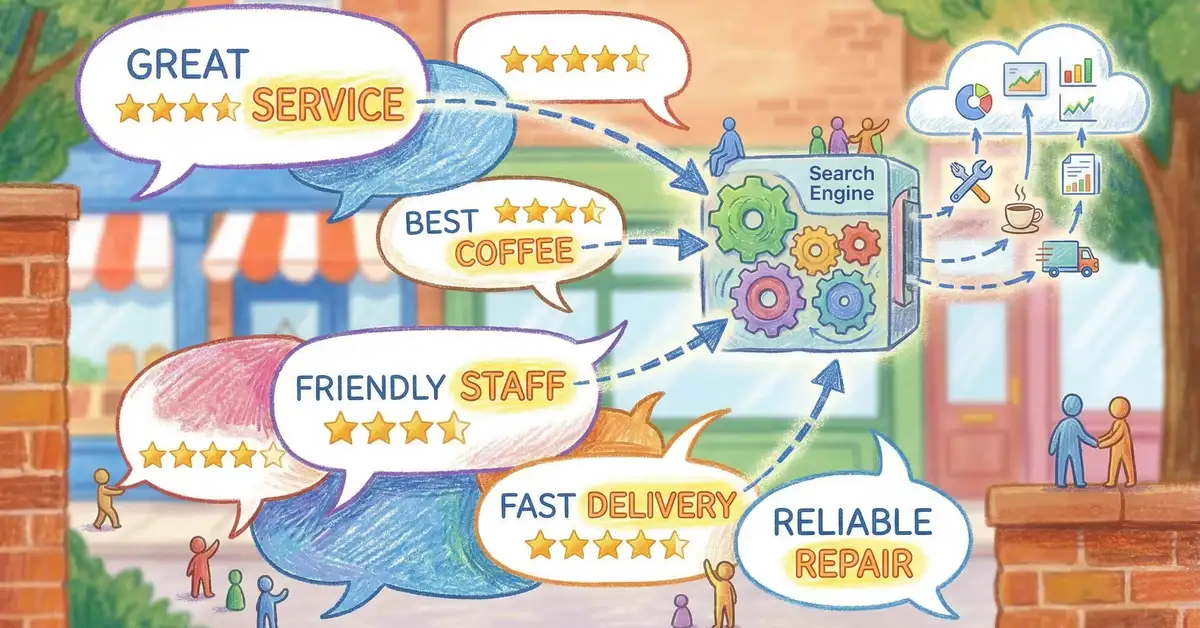
Review recency matters more than volume. Research shows 73% of consumers trust only reviews written within the past 30 days. A business with 50 reviews where 10 were written this month typically outranks a business with 200 reviews where the newest is three years old. Focus on generating a steady stream of 2–4 new reviews monthly rather than sporadic bursts of activity, which can actually trigger algorithmic suspicion of review manipulation.
Respond to every review within 24–72 hours. 97% of consumers who read reviews also read business responses, and Google interprets responses as engagement signals indicating an actively managed business. Use responses strategically — a reply to a positive plumbing review might naturally mention "We're proud to serve the Southend community with reliable emergency boiler repair and installations", reinforcing local keywords and service terms.
Diversify your review presence. While Google reviews remain primary, review presence on Trustpilot, industry-specific platforms, and Facebook contributes to overall credibility. AI search platforms like ChatGPT synthesise information from multiple review sources when making local recommendations — a business with reviews across several platforms projects substantially more authority than one relying solely on Google.
Need help getting your business into the Local Pack? Our local SEO services are built specifically for UK small businesses.
View Local SEO PackagesWhat Is NAP Consistency and Why Does It Matter for Local Citations?
NAP stands for Name, Address, and Phone number — the foundational business information that must remain identical across every platform where your business appears. Businesses with consistent NAP data across major citation sources are 40% more likely to appear in the Local Pack compared to businesses with inconsistent or incomplete citations. This consistency serves as a trust signal, confirming to Google that your business information is accurate, legitimate, and stable.
Essential UK Citation Platforms
Yell.com (2.7 million monthly UK visitors — non-negotiable starting point), Thomson Local (strong in suburban and rural areas), 192.com, FreeIndex, Hotfrog, Apple Business Connect (70% of iPhone users rely on Apple Maps), Bing Places, and your local chamber of commerce website.
Common NAP Mistakes
"Smith's Plumbing Limited" on Google, "Smith's Plumbing" on Yell, and "Smiths Plumbing" on Thomson Local creates algorithmic confusion. Decide on one exact format for your business name, address (including "Street" vs "St."), and phone number — then enforce it everywhere.
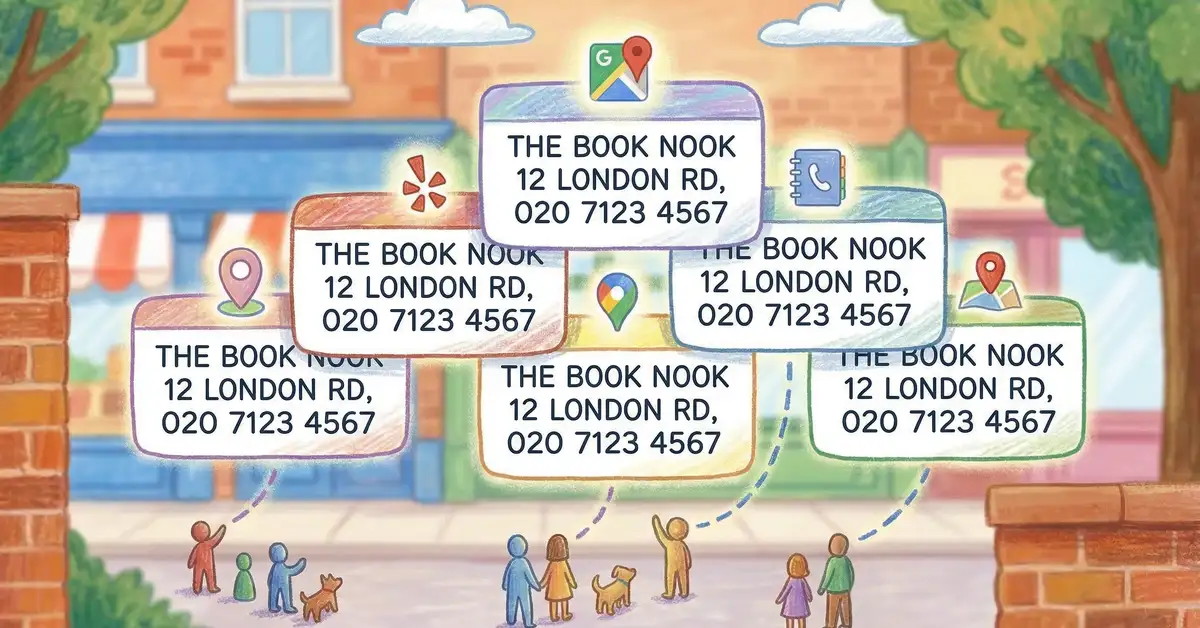
Use a local area code telephone number rather than a toll-free 0800 number — a Manchester business using a 0161 area code reinforces geographic relevance in ways a toll-free number cannot. Ensure your category selection on citation platforms mirrors your primary GBP category. If you're listed as a "restaurant" on Yell but a "café" on Thomson Local and a "coffee shop" on Google, the categorical inconsistency actually harms visibility.
Citation building is not a one-time project. Start with a comprehensive audit using tools like Whitespark or BrightLocal to identify existing citations and NAP inconsistencies. Complete profiles on primary UK platforms first, then expand to industry-specific directories and hyperlocal directories serving your specific regions. Run quarterly citation audits to catch duplicates, inconsistencies from business changes, and new listing opportunities. For professional local SEO services that include citation management, our team handles the systematic process of building and maintaining your citation profile.
How Should You Build Local Links to Strengthen Authority?
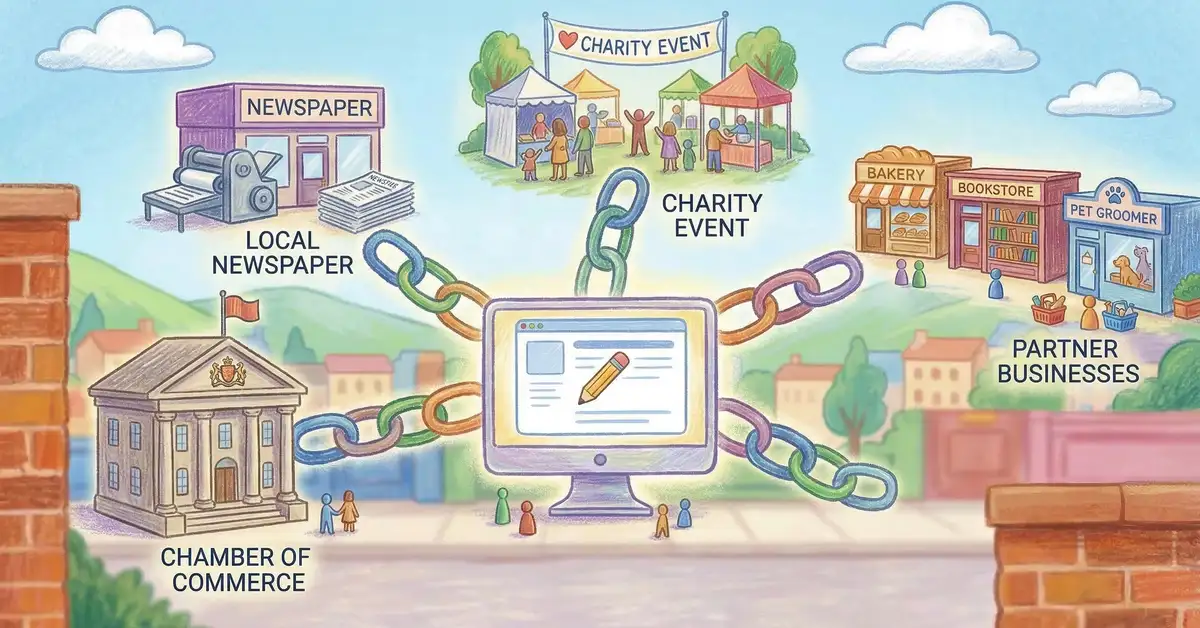
Local link building focuses on acquiring backlinks from geographically relevant sources — and the geographic relevance matters significantly. Research indicates that links from UK-specific sites provide up to 40% better local search impact compared to generic international links. A link from your local chamber of commerce website or a regional news publication carries substantially more weight for local rankings than a link from an international directory with no geographic connection to your market.
Directories and Professional Associations
Join your local chamber of commerce and relevant industry bodies (Guild of Master Plumbers, ACCA, local trade associations). These memberships provide both a citation on an authoritative platform and a backlink to your website — delivering double SEO value from a single action.
Local Media and PR
Sponsor local charity events, launch community initiatives, or partner with local organisations — then secure press coverage. A dog groomer organising a charity grooming day for rescue dogs generates press coverage, a backlink from the local news website, and 50+ potential new customers from the exposure.
Strategic Local Partnerships
Partner with complementary (not competing) local businesses for mutual linking and referrals. A wedding photographer partners with a florist, cake baker, and venue planner — creating a network of local businesses that link to each other and create genuine customer referral relationships.
Local Blogger Outreach
Identify local bloggers writing about food, lifestyle, parenting, or neighbourhood guides, and offer genuine collaboration — expert interviews, product reviews, or data insights. The approach works because it provides value to their audience rather than simply requesting a link.
How Can Small Businesses Appear in AI Search Recommendations?
AI search platforms — Google AI Overviews, ChatGPT, Perplexity, and Gemini — now recommend local businesses directly within conversational answers, but strong Google rankings do not guarantee AI visibility. Research from Localogy found that fewer than half of businesses ranking well on Google appear consistently in AI results. Only 1–11% of eligible local businesses appear in AI-generated recommendations for a given query, making this a significant competitive opportunity for early adopters.
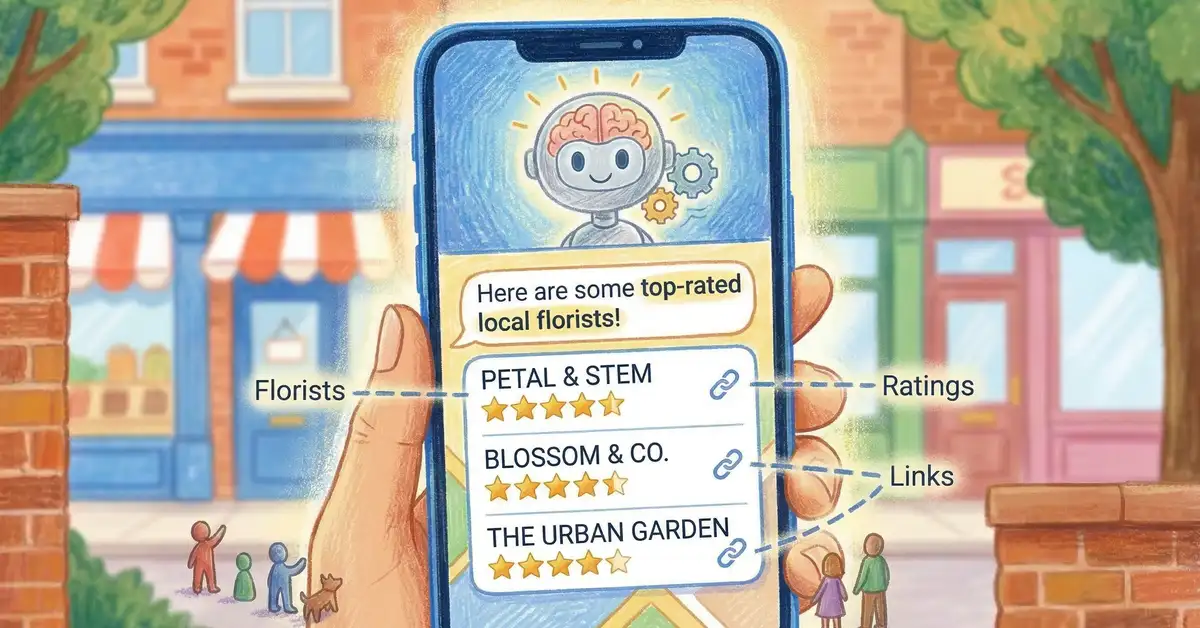
Each AI platform sources information differently. ChatGPT synthesises from Bing Places, industry directories, business websites, and review platforms — not Google's ranking system. Gemini aligns more closely with Google Business Profile data but still draws from broader sources. The practical implication is that optimising solely for Google is no longer sufficient. You need consistent, clear information across every platform where your business appears.
Make your website unmistakably clear about what you do and where. When AI systems process your website, they try to answer "What is this business?" If the answer is unclear, AI systems exclude you rather than guess. Write explicit service descriptions ("We specialise in boiler installation, servicing, and emergency repair for domestic properties across the Manchester area" rather than "We provide HVAC services"), clear geographic coverage statements, and comprehensive FAQ content that AI systems can extract and cite.
Build review presence across multiple platforms — Google, Trustpilot, industry-specific sites — because AI systems use convergent data from independent sources as confidence signals. When multiple platforms provide consistent information about your business, AI systems gain enough confidence to recommend you. For a deeper understanding of how AI search citation works across platforms, read our guide to ranking in AI search results.
What Local Content Strategy Drives Rankings for Small Businesses?
Local content strategy bridges the gap between technical optimisation signals and organic search visibility through content that local searchers actually want to find. The most effective approach treats each distinct service and geographic combination as a unique content opportunity requiring dedicated, high-quality content — not templated pages where only location names change.
For businesses serving multiple areas, create location-specific landing pages for each area. A kitchen installation business operating across five geographic areas should build dedicated pages like /kitchens-bedford/ and /kitchens-luton/, each with unique content describing specific experience in that location, local images of completed work, customer testimonials from that area, and an embedded Google Map. Content that describes specific local landmarks, neighbourhood characteristics, or area-specific service variations — "We specialise in slate roofing common in older Derbyshire stone cottages" — demonstrates authentic local expertise that both humans and search engines value.
Structure content to capture featured snippets and voice search answers. Use question-based H2 and H3 headings that match how people query ("How long does a boiler installation take?", "Can you come out on evenings?") with 40–60 word direct answers immediately below. These snippets appear prominently in search results and are read aloud for voice search queries. Implement FAQ schema markup on these pages — it allows your questions and answers to appear as rich snippets in search results, amplifying visibility significantly. For guidance on building your technical SEO foundation, including schema markup implementation, see our comprehensive guide.
The Bottom Line
Local SEO success in 2026 requires an integrated approach: a complete Google Business Profile with the right categories, consistent NAP citations across UK platforms, a steady stream of detailed recent reviews, location-specific content, local schema markup, and — increasingly — presence across the platforms that AI search systems use to make recommendations. Start with your Google Business Profile and citation consistency, then layer in reviews, content, and AI optimisation. The businesses that build this foundation now will dominate local visibility as AI search adoption accelerates. For more on how AI is reshaping search, explore our guide to AI search optimisation.
Frequently Asked Questions
How much does local SEO cost for a small business in the UK?
Local SEO costs vary depending on competition and scope, but UK small businesses typically invest between £300 and £1,500 per month for professional local SEO services. The investment delivers strong returns — 40% of local SEO campaigns achieve 500% ROI or greater, and local search converts at 14.6% compared to 1.7% for cold outreach and 2–4% for paid advertising. Many foundational tasks like Google Business Profile optimisation and citation building can be done in-house at no cost beyond time investment.
How long does it take to see results from local SEO?
Google Business Profile optimisation can show results within 2–4 weeks as Google processes your updated information. Citation building typically takes 4–8 weeks as directories index your listings and Google verifies consistency across sources. Review accumulation and local content development are ongoing activities that compound over 3–6 months. Most businesses see measurable improvements in Local Pack visibility within 3 months of implementing a comprehensive local SEO strategy.
What is the Google Local Pack and how do I get into it?
The Google Local Pack is the set of three business listings displayed with a map at the top of search results for location-based queries. It captures 42% of all clicks on local search results. To appear in it, you need a complete and accurate Google Business Profile with the correct primary category, consistent NAP citations across platforms, positive recent reviews, and proximity to the searcher's location. The primary category selection is the single most important factor according to the Whitespark 2026 ranking factors study.
Do I need a physical address to rank in local search?
You need a Google Business Profile, but service-area businesses that visit customers (plumbers, electricians, cleaners) can hide their address and instead define service areas. Your citations should consistently reflect this service-area model rather than providing contradictory physical address information. Use the areaServed property in your LocalBusiness schema markup to define geographic coverage, and ensure your website clearly states which areas you serve.
How important are Google reviews for local SEO?
Google reviews are critical — both the quantity and the content. Google now parses review text to identify service mentions and location references rather than treating all reviews equally. A review mentioning "They fixed our leaking boiler within two hours" provides more ranking signal for boiler repair searches than "Great service". Review recency also matters: 73% of consumers trust only reviews from the past 30 days. Aim for 2–4 new reviews monthly rather than large sporadic bursts.
Should I worry about AI search for my local business?
Yes, but as an opportunity rather than a threat. Only 1–11% of eligible local businesses appear in AI-generated recommendations, meaning the field is wide open for early adopters. AI platforms like ChatGPT and Perplexity source information from directories, review platforms, and business websites — not just Google rankings. Ensuring your business information is clear, consistent, and present across multiple platforms positions you for AI visibility as adoption grows. Currently 51% of UK adults use AI search tools, with B2B adoption running approximately three times the rate of consumer users.
Ready to Dominate Local Search in Your Area?
Whitehat SEO helps UK small businesses build local visibility that converts. From Google Business Profile optimisation to citation building and review strategy — we handle the technical work so you can focus on running your business.
View Local SEO Services Get a Free SEO AuditSources: Loop Digital Local SEO ROI Report 2026, Social Matrix Local Search Study 2025, SQ Magazine Google Search Statistics 2026, Whitespark 2026 Local Search Ranking Factors, BrightLocal Local Algorithm Research 2026, Localogy AI Visibility Study March 2026, Bare Digital UK Business Directories 2025, Jasmine Directory Citation Guide 2026, Agency Jet GBP Optimization Guide 2026, Revved Digital GBP Tips 2025, GetPhound Review Velocity Research 2025, SEO Works UK SEO Statistics 2026