
AI Governance Framework: Building Responsible AI Practices for UK Businesses
Effective AI governance is no longer a compliance afterthought—it's a strategic imperative. UK organisations face an unprecedented convergence of regulatory pressures that require structured governance frameworks to ensure responsible AI deployment, protect stakeholder trust, and maintain competitive advantage in an evolving regulatory landscape.
73%
Organisations with Formal Governance
UK enterprises implementing AI frameworks
August 2026
EU AI Act Full Implementation
Regulatory compliance deadline
4/10
Average Governance Maturity Score
UK business readiness assessment
Sources: ICO AI Guidance 2026, EU AI Act Overview, IDC Research 2026
Key Takeaway
AI governance frameworks that integrate risk classification, human oversight, data integrity controls, and continuous monitoring create dual value: they reduce regulatory exposure whilst enabling faster, more confident AI adoption across the organisation.
1. Understanding AI Governance in 2026
Artificial intelligence governance encompasses the policies, processes, controls, and oversight mechanisms organisations implement to ensure AI systems operate safely, ethically, and in compliance with regulatory requirements. In 2026, governance has evolved from aspirational best practice to a mandatory strategic requirement driven by a convergence of regulatory frameworks.
The UK Information Commissioner's Office has published statutory guidance on AI and automated decision-making. Simultaneously, the EU AI Act moves toward full implementation in August 2026, creating binding obligations that affect UK organisations trading with European counterparts. The Financial Conduct Authority, Care Quality Commission, and NHS have all published AI-specific governance expectations for their regulated sectors.
Effective governance balances innovation acceleration with risk mitigation. Rather than creating friction, well-designed governance frameworks reduce uncertainty, enable faster deployment decisions, and build stakeholder confidence in AI-driven transformation.
2. The Five Core Pillars of AI Governance
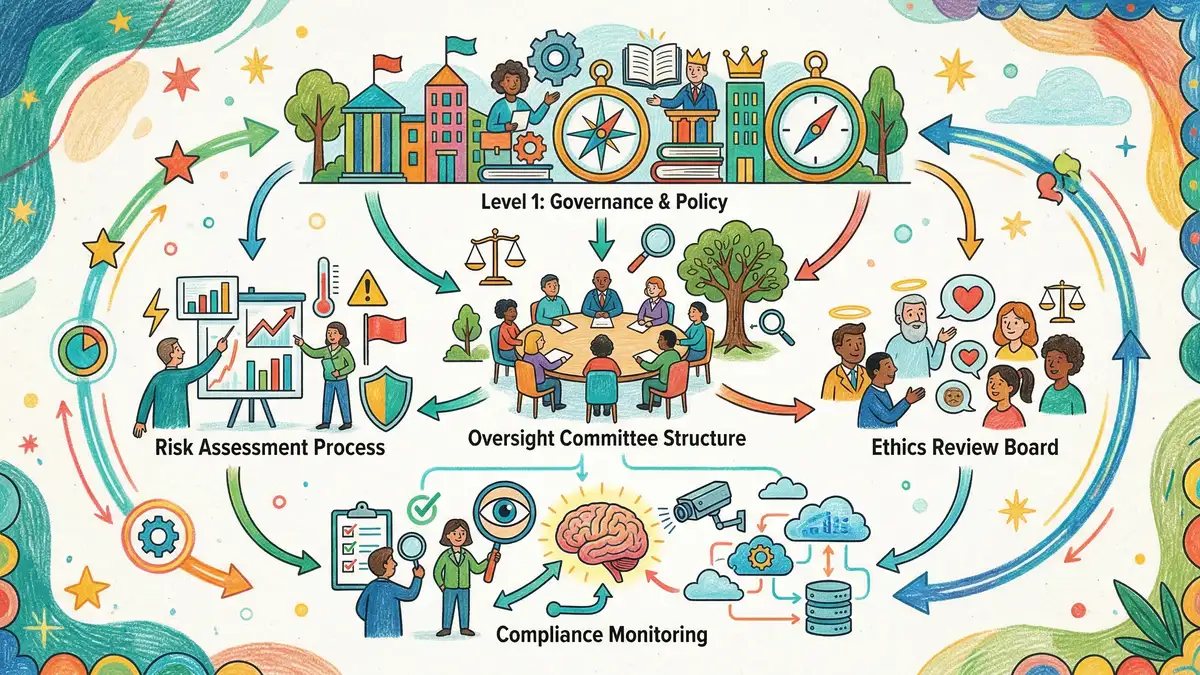
Robust AI governance rests on five interdependent pillars. Each pillar addresses specific risks whilst supporting the others to create a cohesive governance ecosystem.
Risk Classification & Assessment
Systematic categorisation of AI applications by risk level (minimal, low, medium, high) based on potential impact on rights, safety, and society. Enables proportionate governance investment and resource allocation.
Human Oversight & Accountability
Clear assignment of roles and responsibilities for AI system decisions. Ensures human judgement remains in the loop for high-impact decisions, maintaining accountability and enabling rapid intervention when systems behave unexpectedly.
Data Integrity & Quality Controls
Rigorous data governance including source validation, bias detection, and ongoing quality monitoring. Prevents model degradation and ensures training and inference data remain fit for purpose throughout the system lifecycle.
Explainability & Transparency
Documentation and disclosure of how AI systems make decisions. Critical for regulatory compliance, stakeholder trust, and enabling teams to identify when systems operate outside expected parameters.
Continuous Monitoring & Remediation
Ongoing performance monitoring, incident logging, and documented response procedures. Enables rapid identification and correction of model drift, unexpected behaviours, and emerging risks.
3. Regulatory Framework Overview
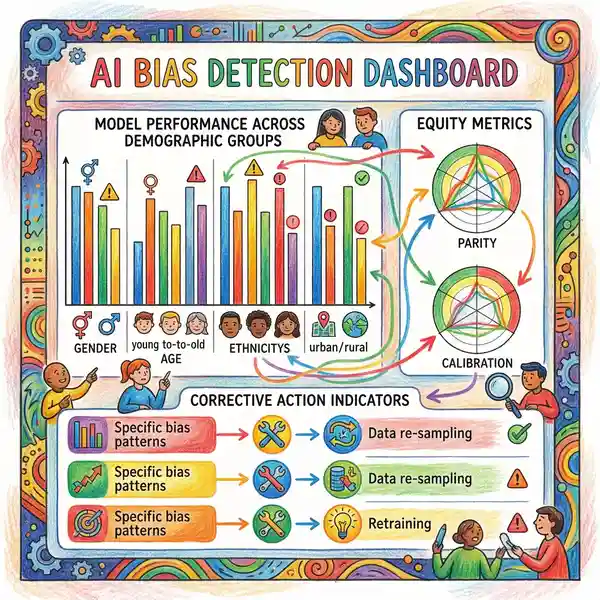
UK organisations face a layered regulatory landscape. Understanding which frameworks apply to your organisation, industry, and specific AI applications is essential for designing proportionate governance structures.
| Framework | Jurisdiction & Scope | Key Requirements |
|---|---|---|
| EU AI Act | EU + UK organisations trading with EU; all high-risk AI systems | Risk classification, documentation, conformity assessment, human oversight |
| ICO Code of Practice | UK organisations; AI and automated decision-making | Accountability, transparency, algorithmic impact assessment |
| FCA AI Review | UK financial services firms; AI in retail and institutional contexts | Risk management, model validation, consumer protection |
| MHRA AI Regulation | UK healthcare organisations; AI in diagnostic and therapeutic applications | Clinical validation, real-world performance monitoring, adverse event reporting |
| ISO/IEC 42001 | International; AI Management Systems across all sectors | Risk management, capability maturity, systematic controls |
Sources: European Commission AI Act, FCA AI Review 2026, ISO/IEC 42001:2023
4. Building Your AI Governance Framework
Implementing AI governance doesn't require starting from scratch. Most organisations can leverage existing governance structures—particularly those from risk management, information security, and data protection—and adapt them for AI-specific requirements.
Ready to build a governance framework aligned with your risk appetite and regulatory environment?
Explore AI Strategy Consulting5. Common Governance Challenges & Solutions
The Cost of Getting It Wrong
Common mistake: Treating governance as a compliance checkbox rather than a strategic advantage. Many organisations implement minimal controls, then face rapid governance debt when AI deployments proliferate.
The reality: Strong governance frameworks established early become increasingly valuable as AI adoption scales. Organisations that build governance foundations now can deploy AI systems faster and with greater stakeholder confidence than competitors playing catch-up.
Building effective governance often reveals three persistent challenges:
Governance Versus Speed Tension
Teams worry that rigorous governance will slow AI development. The evidence suggests the opposite: clear governance criteria help teams make faster decisions because they reduce uncertainty and rework cycles.
Expertise and Resource Constraints
Many organisations lack in-house expertise in AI governance and data science. Consider hybrid approaches: embed governance requirements in procurement, use third-party compliance frameworks, and invest in staff development progressively.
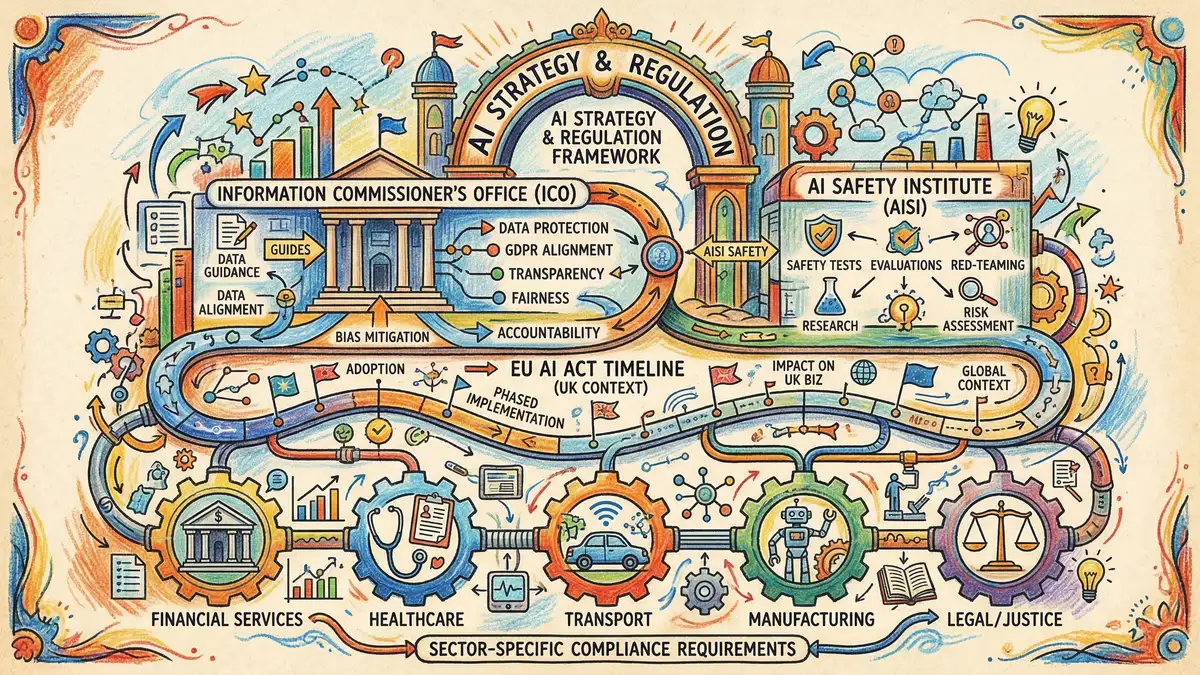
6. Maturity Assessment & Continuous Improvement
Governance maturity is not a binary state—it's a continuous journey. Most organisations benefit from conducting regular maturity assessments to identify improvement priorities and benchmark against industry peers.
| Level | Characteristics | Recommended Actions |
|---|---|---|
| Initial (1) | Ad-hoc approaches, limited documented processes | Establish AI governance steering committee, document current state, define risk classification |
| Developing (2) | Documented processes, inconsistent implementation | Standardise governance templates, implement monitoring tools, establish training programmes |
| Managed (3) | Systematic processes, consistent application, regular reviews | Automate governance workflows, integrate with development pipelines, conduct regular audits |
| Optimised (4) | Continuous improvement culture, predictive risk management | Implement AI-assisted compliance monitoring, establish governance centres of excellence, publish external governance reports |
Sources: ISO/IEC 42001:2023 Maturity Model, NIST AI Risk Management Framework, IDC AI Governance Assessment 2026
7. FAQ: AI Governance Questions
Do we need separate governance frameworks for different AI applications?
No. A single framework with proportionate controls works best. Classify AI applications by risk level, then apply governance intensity accordingly. A recommendation engine for e-commerce requires different controls than a clinical diagnostic system, but both fit within a single governance structure.
How do we handle third-party AI vendors in our governance framework?
Extend governance requirements upstream. Include AI governance clauses in vendor contracts, require documentation of model training and testing procedures, and establish service level agreements for monitoring and remediation. Don't outsource accountability—you remain responsible for AI systems your organisation deploys.
What's the minimum governance investment for a small business?
Start with risk classification of your AI applications, assign clear accountability for each system, document decision-making processes, and establish basic monitoring. This foundation—often 2-4 weeks of effort—prevents the majority of governance failures. Scale investments as AI adoption increases.
How frequently should we audit our AI governance framework?
Conduct comprehensive governance audits annually. For high-risk systems, implement quarterly monitoring. As part of continuous improvement, review framework effectiveness whenever deploying new AI applications or after any governance incidents.
Are there industry-specific governance variations we should know about?
Yes. Financial services requires strict validation and consumer protection controls. Healthcare demands clinical evidence and regulatory approval. Legal services must maintain privilege and avoid unauthorised practice. Review your sector regulator's guidance and adapt the framework accordingly.
What role does data governance play in AI governance?
Data governance is foundational. AI systems are only as good as their data. Governance must address data provenance, quality assurance, bias detection, and retention. Many governance failures originate in data quality issues rather than model design problems.
Sarah Mitchell
AI Governance Specialist, Whitehat
Sarah advises UK organisations on AI governance frameworks, regulatory compliance, and risk management. With 12 years in compliance and governance roles, she specialises in translating regulatory requirements into practical business frameworks that balance innovation with oversight.
Is Your AI Governance Ready for 2026?
We help UK organisations build governance frameworks that reduce regulatory risk whilst accelerating AI adoption. Our approach integrates risk management, compliance, and operational excellence.
Related reading: AI Strategy for Business: A Comprehensive Framework