
The SEO tools landscape has fundamentally transformed. What were once basic keyword research assistants have evolved into autonomous AI systems that handle everything from content creation to ranking optimization. If you're a UK marketing manager or SEO professional evaluating tools in 2026, you're navigating a market where the right platform can drive 30–50% cost efficiency improvements while simultaneously boosting rankings and traffic.
This guide breaks down the best AI SEO tools available today, compares pricing tiers, and reveals which platforms deliver genuine ROI versus hype. Whether you're looking to automate content workflows, improve search rankings, or integrate AI into existing processes, you'll find actionable insights to inform your investment decision.
Why AI SEO Tools Matter
30–50%
Cost efficiency gains from AI automation
30–35%
Ranking improvements within 90 days
14.2%
Conversion rate vs 2.8% traditional search
What Are AI SEO Tools?
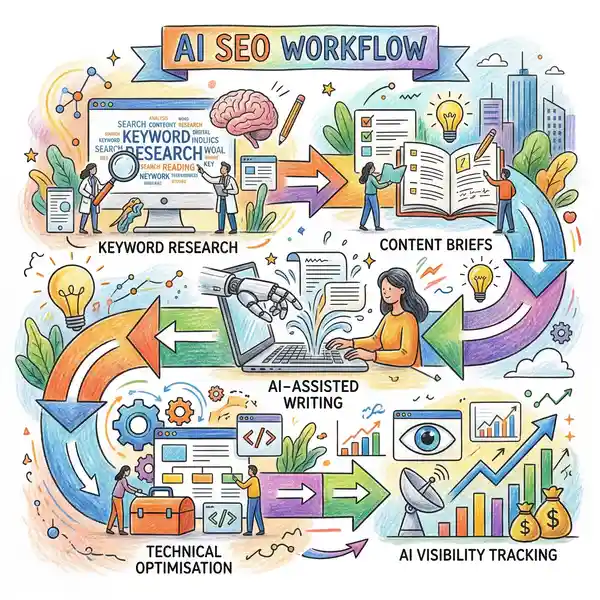
AI SEO tools are platforms that use machine learning and large language models to automate, optimise, and streamline search engine optimisation workflows. Rather than relying purely on human effort, these tools handle keyword research, content generation, competitive analysis, on-page optimisation suggestions, and ranking tracking—often with minimal human intervention.
The shift from traditional SEO tools to AI-powered platforms has been dramatic. Five years ago, most SEO software focused on data collection and reporting. Today's best tools integrate generative AI directly into workflows, meaning you can brief the system on your target audience, and it will automatically research keywords, create content outlines, identify ranking opportunities, and flag technical issues—all in hours instead of days.
This evolution reflects a fundamental truth in SEO: the bottleneck is no longer data availability, but the time and expertise required to act on it. AI tools compress that gap.
Top AI SEO Tools Compared: Features & Pricing
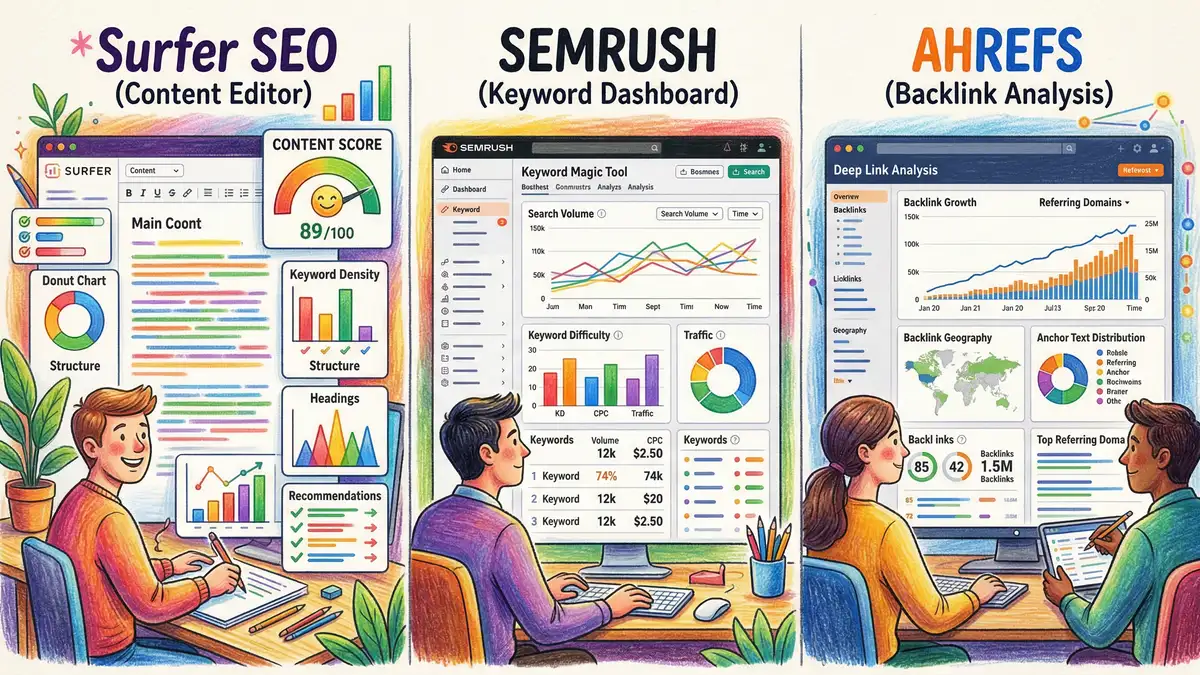
The market leader varies by use case, but several platforms consistently deliver the highest ROI for UK agencies and in-house teams. Here's a detailed comparison:
| Platform | Starting Price (GBP) | AI Features | Best For |
|---|---|---|---|
| Semrush | £102/month | Content editor, keyword intent analysis, competitive briefing, AI-powered site audit | Agencies, enterprise teams, multi-domain management |
| Ahrefs | £95/month | Content gap analysis, AI outlines, rank tracking with predictive insights | Backlink analysis, competitive research, content planning |
| Surfer SEO | £73/month | On-page content optimisation, AI research, SERP analysis | Content teams, freelancers, budget-conscious agencies |
| Frase | £11/month | Content brief generation, SEO writing assistant, SERP analysis | Solo writers, small teams, tight budgets |
| One Premium | £199/month | Autonomous AI workflows, real-time optimisation, API access | Enterprise, high-volume content, custom integrations |
Pro tip: Many teams underestimate the power of free ChatGPT (or £20/month Pro) paired with Google Search Console. According to industry benchmarks, this combination delivers approximately 80% of premium tool results at a fraction of the cost—though without the specialised SEO features that platforms like Ahrefs and Semrush provide.
How AI-Powered SEO Tools Boost Rankings & Traffic
AI SEO tools improve rankings through three primary mechanisms: content optimisation, workflow automation, and predictive insights.
Content Optimisation at Scale
Platforms like Surfer SEO and Frase analyse the top-ranking pages for your target keyword and generate structured briefs that tell you exactly what topics to cover, word counts, semantic keywords to include, and structural elements (headings, lists, tables) to incorporate. This removes the guesswork from on-page SEO.
The result: content that ranks faster because it's built on data rather than intuition. Teams using these tools report 30–35% ranking improvements within 90 days, especially when combined with existing content audits and link-building efforts.
Autonomous Workflow Systems
The newest generation of AI SEO tools (such as One Premium and BrightEdge) move beyond assistance to full automation. These platforms can:
- Monitor SERP changes and flag ranking threats in real-time
- Identify content gaps across your domain automatically
- Generate and publish content briefs without manual input
- Optimise internal linking based on topical relevance
- Detect technical SEO issues and suggest fixes automatically
Companies using autonomous AI workflows see a 30% increase in search revenue and 74% YoY revenue growth in some cases, though results vary widely based on implementation quality and existing content maturity.
Predictive Insights & Opportunity Scoring
AI tools now predict which keywords are most likely to convert, which topics are emerging in your niche, and which ranking improvements will drive the most traffic. Rather than chasing volume, you target high-intent keywords with realistic ranking timelines.
Key Takeaway
AI tools don't replace SEO expertise—they amplify it. You still need to understand your audience, validate keyword research, and oversee content quality. But the 20–30 hours you'd spend on manual analysis, brief writing, and optimisation can be cut to 2–5 hours with the right platform.
The Role of AI in Content Generation for SEO
Content generation is where AI SEO tools shine most visibly—and where quality varies most dramatically. The best tools aren't generic LLM wrappers; they're purpose-built for SEO content.
Specialised SEO Writers vs Generic AI
POP AI Writer, a specialised SEO content generator, scored 100 on POP metrics (a industry standard for measuring relevance and usefulness) versus approximately 73 for generic LLMs like standard ChatGPT. The difference: POP AI Writer was trained on thousands of high-ranking articles and understands the implicit structures, keyword densities, and semantic patterns that help content rank.
Translation: Use specialised AI tools for SEO content; use ChatGPT for outlines, brainstorming, and supporting tasks.
Content Team Cost Efficiency
Teams using AI-assisted content workflows report 30–50% cost efficiency improvements. This doesn't mean producing 3x as much content with the same headcount; rather, you're:
- Reducing time spent on research and brief writing (the heaviest manual tasks)
- Increasing draft quality, which reduces editorial revision cycles
- Scaling freelancer and junior writer output without proportional cost increases
- Producing more variations (e.g., long-form + short-form versions) from single research
Ready to Implement AI SEO Tools?
Our AI SEO services help UK marketing teams integrate platforms like Semrush, Ahrefs, and Surfer into existing workflows—without disruption.
Explore Our ServicesAI Citations & Referral Traffic: A New Ranking Factor?
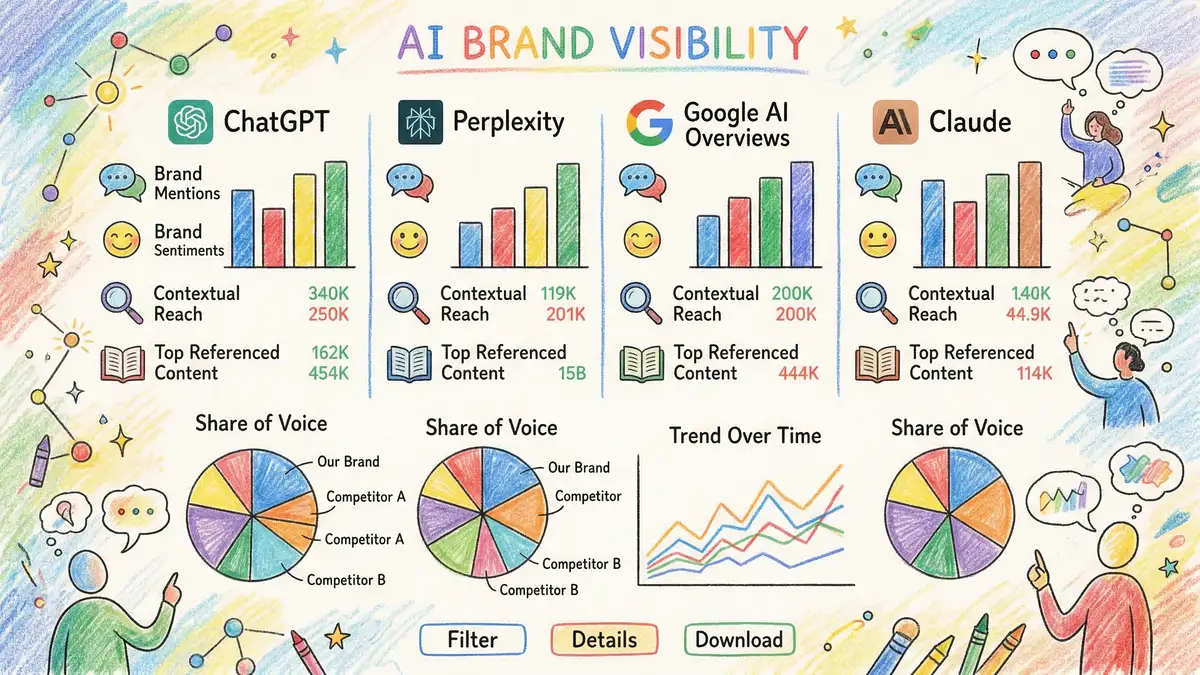
One of the most significant shifts in SEO over the past 18 months is the emergence of AI-generated referral traffic as a ranking signal. Google's AI Overviews cite sources directly, and when your site is cited, you get attribution links—often at higher quality than traditional organic search links.
The Numbers Behind AI-Referred Traffic
In June 2025, AI citations drove 1.13 billion referral visits—a 357% year-over-year increase. More importantly, AI-referred traffic converts at 14.2%, compared to just 2.8% for traditional search referrals. This isn't because visitors from AI are fundamentally different; it's because they're more qualified. AI is directing searchers to highly relevant, authoritative content.
For SEO professionals, this means: earning AI citations is becoming as important as ranking in organic search. Tools that monitor AI Overview appearances and help you optimise for citation eligibility are increasingly valuable.
How to Optimize for AI Citations
AI systems cite sources that are:
- Authoritative: High domain authority, established publication history
- Recent: Content published within the past 6–12 months ranks higher in AI citations
- Specific: AI prefers sources with narrow, expert angles over broad generalist content
- Structured: Content with clear headings, data, and cited sources gets cited more often
In short: create research-backed content on specific topics, update it regularly, and ensure your site has strong authority signals. AI tools that monitor your citation frequency and identify topics where you're close to earning citations can help you prioritize this work.
Common Challenges: Integration, Quality Control & ROI Measurement
While AI SEO tools deliver impressive results on average, 38% of businesses struggle with integration and quality control. Here's what typically goes wrong—and how to avoid it.
Tool Overload & Workflow Friction
Many agencies adopt multiple AI tools—one for content research, another for writing, another for SEO analysis—and end up with disconnected workflows. Data flows manually between systems, duplicating work and creating bottlenecks.
Solution: Choose a primary platform that covers your highest-impact workflows. Semrush, Ahrefs, and Surfer are designed to handle keyword research → brief generation → content optimisation in a single system. Use specialist tools (like ChatGPT for copywriting) for support, not as your primary platform.
AI Content Quality Issues
AI-generated content sometimes lacks voice, contains subtle inaccuracies, or reads generically. Publishing low-quality content damages your reputation and increases bounce rates, which harms rankings over time.
Solution: Treat AI as a first-draft tool, not a final publication mechanism. Always have a human editor review, fact-check, and add brand voice. This human-in-the-loop approach eliminates quality risks while maintaining the cost savings from automation.
Measuring ROI Beyond Rankings
Many teams track rankings but ignore conversion metrics. A 30% ranking improvement sounds great until you realise it didn't drive qualified leads. Conversely, AI tools can drive traffic that converts at 14.2% (via AI citations), but you'll miss this if you only monitor organic keywords.
Solution: Track cost-per-acquisition alongside rankings. Implement UTM parameters for traffic from AI Overviews so you can measure its contribution separately. Use platform dashboards to monitor engagement metrics (time on page, scroll depth) as leading indicators of conversion performance.
Choosing the Right AI SEO Tool for Your Team
The best AI SEO tool depends on your team size, technical expertise, and primary use case. Here's a quick decision framework:
For Solo Freelancers & Content Creators
Start with Frase (£11/month) for brief generation and Surfer SEO (£73/month) for on-page optimisation. Pair with free ChatGPT for drafting. Total cost: ~£100/month delivers 80% of results you'd get from a £200+ platform.
For Small Agencies (3–15 People)
Choose between Semrush (£102/month) or Ahrefs (£95/month) as your primary platform. Both offer all-in-one capabilities and scale to 5–10 team members without friction. Semrush edges ahead if you need white-label functionality for clients; Ahrefs excels at backlink analysis and competitive research.
For Enterprise & High-Volume Publishers
Invest in One Premium (£199/month) or BrightEdge for autonomous workflows and real-time monitoring. These platforms justify their cost through labour savings alone if you're publishing 50+ pieces monthly.
The Whitehat Approach
At Whitehat, we recommend starting with one primary platform and adding tools gradually based on observed bottlenecks. Many clients find that Semrush or Ahrefs alone, combined with strategic use of ChatGPT and Google Search Console, delivers the ROI they need. Add specialist tools (like Frase for brief writing or Surfer for content optimisation) only when one platform isn't meeting specific workflow needs.
Frequently Asked Questions
Do I really need a paid AI SEO tool, or is free ChatGPT enough?
It depends on scale. For a single blog or small website, free ChatGPT + Google Search Console + one free SEO auditor covers 70% of what you need. Paid tools become essential when you're managing multiple sites, publishing frequently, or competing in high-KD niches where content differentiation matters. The time savings alone—hours of research condensed to minutes—justify the cost for teams.
Will AI-generated content get penalised by Google?
No, not explicitly. Google's official guidance states that AI-generated content is fine if it's helpful, accurate, and demonstrates expertise. The problem isn't AI; it's low-quality content. A well-edited AI brief + human-written article will rank fine; mass-produced, unedited AI content will underperform.
How long before I see ranking improvements from an AI SEO tool?
Typically 30–90 days for new content to begin ranking, and 3–6 months for existing content optimisation to show measurable traffic gains. The timeline depends on domain authority, competition level, and how well the tool's recommendations align with real user intent. Tools like Keytomic report 30–35% improvements within 90 days, but this assumes you're implementing recommendations consistently.
Can AI tools handle highly technical or niche topics?
Yes, but with caveats. AI tools excel at summarising existing top-ranking content, which works well for most niches. For highly technical topics (medical, legal, scientific), AI-generated content requires expert review to ensure accuracy. In these cases, treat AI as a research and outline tool, not a content author.
Is it worth switching from my current SEO tool to an AI-powered alternative?
If your current tool doesn't include AI features (like content briefs, predictive insights, or autonomous recommendations), upgrading to a platform like Semrush, Ahrefs, or Surfer will likely improve your team's efficiency and results. However, switching costs (learning curve, data migration, team retraining) mean you should commit to the new tool for at least 3–6 months before evaluating ROI.
What about AI tools for link building and technical SEO?
Ahrefs and Semrush include AI-powered link opportunities and technical audit alerts, but they don't replace manual outreach and developer expertise. AI can identify link targets and flag issues; humans must build relationships and fix the problems. For technical SEO specifically, AI tools are excellent at diagnosis (finding crawl errors, structure issues) but require technical expertise to implement solutions.
Ready to Transform Your SEO with AI?
Our team helps UK agencies and enterprises implement AI SEO tools that drive measurable ranking and traffic improvements. Learn how to integrate the right platform into your workflows without disruption.
Get Started With AI SEOExplore Related Topics
- AI for SEO: The Pillar Guide — Comprehensive overview of AI's role in SEO strategy
- ChatGPT for Marketing — Practical applications of ChatGPT beyond SEO
- AI Content Strategy — Building a sustainable content machine with AI
- AI in Marketing — Broader AI applications across marketing functions
- AI Marketing Tools — Overview of AI platforms for marketers